
 +91 97894 90361
 medkeerthi@gmail.com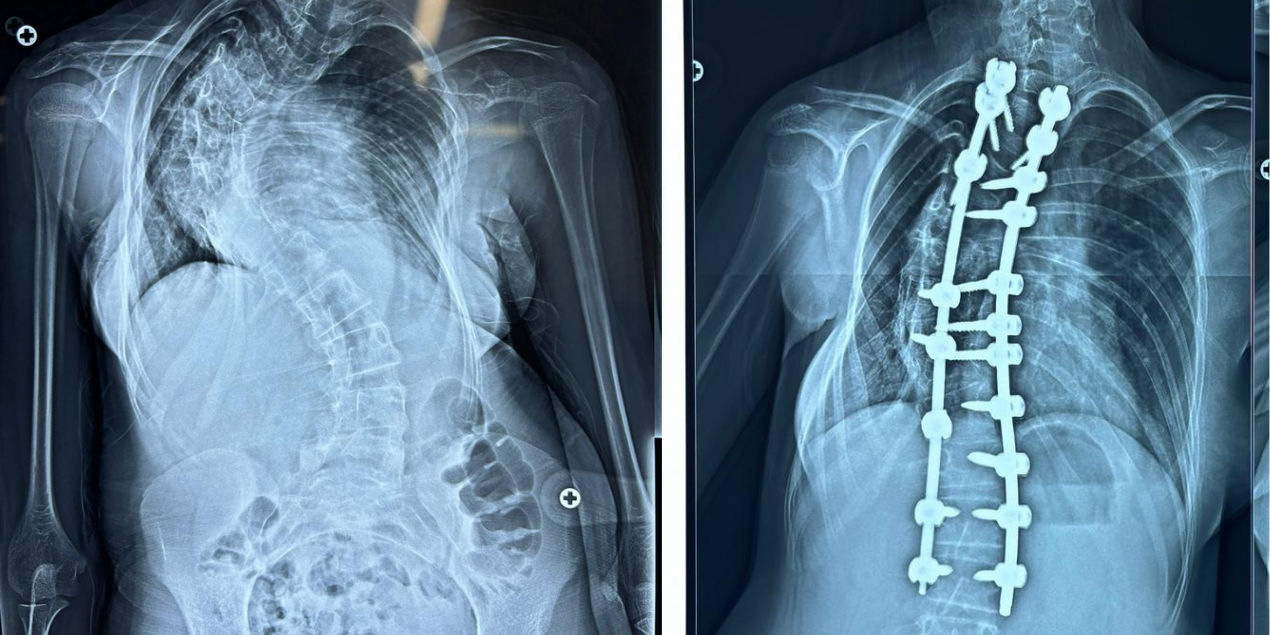
About the Author
Dr. Keerthivasan P is a Consultant Spine Surgeon in Chennai with specialized expertise in scoliosis correction and complex spine surgeries. He focuses on delivering safe, precise, and patient-centered care, with strong experience in treating pediatric and adolescent spinal deformities.
"Committed to restoring spine health, confidence, and quality of life through advanced surgical care."
Introduction: A Concern Many Parents Walk In With
As a spine surgeon, I often meet parents who come in with a subtle but worrying observation:
"Doctor, something doesn't look right with my child's posture… one shoulder seems higher."
In many such cases, this turns out to be scoliosis, a condition that can slowly progress during the rapid growth phase of adolescence.
What makes scoliosis challenging is that it often develops without pain in the early stages, so it can easily go unnoticed until the curve becomes more visible. By the time parents observe a change, the condition may already be progressing.
In this blog, I want to walk you through a real case from my practice—a 13-year-old patient who underwent scoliosis correction surgery in Chennai. I'll explain everything the way I usually do in my consultation room—clearly, honestly, and step by step—so you can make informed decisions if your child is facing a similar issue.
Understanding Scoliosis: What I Explain to Every Parent
When I explain scoliosis to parents, I avoid medical jargon and keep it simple.
Scoliosis is not just a side-to-side curve—it is a three-dimensional deformity of the spine, which means:
- The spine curves sideways
- It may rotate
- It can affect the rib cage and posture
This is why scoliosis can sometimes cause a visible rib hump or uneven back contour.
Common Signs I Ask Parents to Watch For
From my clinical experience, these are early indicators:
- One shoulder appears higher than the other
- One hip looks more prominent
- The child leans slightly to one side while standing
- Uneven spacing between arm and waist
- Clothes don't sit evenly
In many adolescents, especially girls, scoliosis develops during growth spurts between 10–15 years of age.
Why Early Detection Makes a Big Difference
If detected early:
- Mild curves can be monitored
- Moderate curves may be managed with bracing
- Severe curves can be corrected before complications arise
Delaying treatment can lead to:
- Increased curvature
- Cosmetic concerns
- Rarely, breathing issues in severe cases
The Patient's First Visit: What I Observed
When this 13-year-old patient visited my clinic, her parents were understandably concerned.
They had noticed:
- A visible curvature in her back
- Uneven shoulders
- Slight imbalance while standing
During my examination, I performed a forward bend test, which clearly showed asymmetry in her spine.
What Stood Out to Me
- A structured spinal curve—not just poor posture
- Rib prominence indicating rotation
- Early emotional impact—she was becoming conscious about her appearance
As a doctor, I always pay attention not just to physical findings but also to how the condition is affecting the child mentally and socially.
Diagnosis: Confirming the Severity
The next step was imaging, which is essential for accurate diagnosis.
I recommended a standing full-spine X-ray, which helps us measure the curvature using the Cobb angle—the gold standard in scoliosis assessment.
Findings in This Case
- Cobb angle: More than 70 degrees
- Curve pattern: Progressive
- Diagnosis: Adolescent Idiopathic Scoliosis
At this stage, I explained to the parents:
"This degree of curvature is unlikely to improve with non-surgical methods. Surgery is the most reliable way to correct and stabilize the spine."
How Do I Know If My Child Needs Scoliosis Surgery? (Doctor's Clinical Perspective)
As a spine specialist, one of the most common questions I receive is how to determine when pediatric scoliosis requires surgical intervention.
In clinical practice, I evaluate multiple factors before recommending scoliosis correction surgery.
Key Indicators I Assess:
- Cobb angle greater than 40–45 degrees indicating severe spinal curvature
- Progressive increase in spinal deformity during growth phase
- Visible changes in posture and spinal alignment
- Rib prominence due to vertebral rotation
- Ineffective response to bracing
When these factors are present, spinal fusion surgery is often the most reliable way to correct the deformity, stabilize the vertebrae, and prevent further progression.
Non-Surgical vs Surgical Scoliosis Treatment: Understanding the Difference
Treatment for scoliosis depends on the severity of the spinal curvature and the child's stage of growth.
As a scoliosis surgery doctor in Chennai, I always aim to choose the least invasive option that provides long-term stability.
| Treatment Type | Clinical Indication | Outcome |
|---|---|---|
| Observation | Mild curvature (<20° Cobb angle) | Regular monitoring of spine alignment |
| Bracing | Moderate curvature (20–40°) | Slows progression of spinal deformity |
| Surgery | Severe curvature (>40–45°) | Corrects spinal alignment and stabilizes vertebrae |
While non-surgical methods help in early stages, scoliosis surgery becomes essential when structural deformity progresses.
Pre-Operative Planning: Where Precision Matters Most
One thing I always emphasize is that successful scoliosis surgery begins long before entering the operating room.
Pre-operative planning allows me to:
- Understand the curve pattern
- Plan the correction strategy
- Minimize risks
Detailed Pre-Operative Workup
| Test | Why It’s Important |
|---|---|
| Full Spine X-ray | Measures curve and alignment |
| MRI Scan | Rules out spinal cord abnormalities |
| Pulmonary Function Test | Evaluates lung capacity |
| Blood Tests | Ensures overall health for surgery |
Personalized Surgical Planning
Every scoliosis case is unique. I carefully decide:
- Which vertebrae to correct
- Where to place screws
- How much correction is safe
This level of planning ensures precision and safety in scoliosis correction surgery.
Discussing Surgery: My Conversation with the Family
This is often the most sensitive part of the journey.
Parents naturally have concerns:
- "Will my child be safe?"
- "Is surgery really necessary?"
- "What will recovery look like?"
I always take time to explain everything in detail.
What I Told Them
- The curve is progressive and will likely worsen
- Surgery is recommended to prevent long-term complications
- With modern techniques, outcomes are highly successful
I also reassure them:
"You're not alone in this journey—we will guide you at every step."
What Are the Risks of Delaying Scoliosis Treatment?
Delaying treatment in progressive scoliosis can significantly impact both spinal health and overall well-being.
From a medical standpoint, untreated scoliosis may lead to:
- Worsening spinal curvature and deformity progression
- Increased complexity of future spine surgery
- Permanent changes in posture and spinal balance
- Rib cage deformity affecting lung function
- Long-term psychological impact due to visible asymmetry
"Early intervention helps maintain better spinal alignment and reduces the need for more extensive correction later."
The Surgery: What I Did and Why
The procedure I performed was posterior instrumented deformity correction and fusion, which is the gold standard for scoliosis correction.
Step-by-Step Overview
- Placement of screws in selected vertebrae
- Use of rods to correct the curvature
- Fusion of vertebrae to maintain alignment
Technology Used
- Intraoperative neuromonitoring
- Advanced imaging guidance
- Precision surgical instruments
Duration
The surgery took approximately 5 hours, depending on the complexity of the curve.
My primary goal during surgery is always:
- Maximum safe correction
- Spinal cord protection
- Long-term stability
Immediately After Surgery: What We Focus On
Post-operative care is just as important as the surgery itself.
First 48 Hours
- ICU monitoring
- Pain management
- Vital parameter observation
Early Mobilization
I encourage patients to:
- Sit up within 1–2 days
- Start walking with support
This helps:
- Improve circulation
- Reduce complications
- Speed up recovery
Recovery Journey: What I Saw Over Time
Recovery is a gradual process, and I closely monitor progress during follow-ups.
First 2 Weeks
- Pain significantly reduced
- Walking with minimal support
- Discharged home
1–2 Months
- Improved mobility
- Resuming daily activities
- Regular follow-ups
3–6 Months
- Noticeable postural correction
- Increased confidence
- Return to school and normal routine
1 Year
- Full recovery
- Stable spine
- Active lifestyle
Life After Scoliosis Surgery: What Can Your Child Expect?
One of the most reassuring aspects of modern pediatric scoliosis surgery is the excellent long-term outcome.
After spinal fusion and instrumentation, most children experience:
- Improved spinal alignment and posture correction
- Stable vertebral structure preventing further curvature
- Gradual return to normal physical activities
- Enhanced confidence and body image
With proper rehabilitation and follow-up, children can lead active, healthy lives with a well-balanced spine.
Before and After: The Transformation I Witnessed
As a spine surgeon, I've performed many scoliosis correction surgeries—but every case stays with me for a different reason. This particular case stood out not just because of the clinical success, but because of the visible change in the child's confidence and personality over time.
Before Surgery: What I Saw Beyond the Spine
When I first met this 13-year-old patient, the spinal curve was clearly visible—but what concerned me just as much was how it was affecting her daily life.
Physical Challenges I Noticed
- A pronounced lateral curvature of the spine
- Uneven shoulder alignment
- Noticeable rib prominence on forward bending
- Mild postural imbalance while standing and walking
Even though she was not in severe pain, the structural deformity was progressing.
Posture and Appearance Concerns
- Clothes didn't fit symmetrically
- Her posture was visibly tilted
- She often tried to adjust her stance to hide the curve
Emotional and Psychological Impact
- She was quieter than expected for her age
- Avoided eye contact at times
- Became more socially withdrawn
This is where scoliosis begins to affect self-esteem and confidence.
After Surgery: The Transformation I Witnessed
The post-operative transformation is always the most fulfilling part of my work.
Immediate Improvements
- A well-aligned spine
- Balanced shoulders
- Improved posture
Functional Recovery
- Gradual return to daily activities
- Increased mobility and strength
- Back to school with confidence
Emotional Transformation
- More confident communication
- Improved social interaction
- Happier and more active lifestyle
Long-Term Outcome
- Stable spine
- No further progression
- Completely active life
Why Experience Matters in Scoliosis Surgery
Scoliosis surgery is not a routine procedure. Every spine is different, every curve behaves differently, and every patient—especially a growing child—requires a highly individualized surgical plan.
As a spine surgeon, I can confidently say that the success of scoliosis correction depends not just on the procedure itself, but on the experience and decision-making ability of the surgeon at every stage—before, during, and after surgery.
What Makes Scoliosis Surgery Complex
- Operating close to the spinal cord and critical nerves
- Correcting a three-dimensional spinal deformity
- Maintaining the balance between correction and safety
What Experience Brings to the Table
1. Detailed Anatomical Understanding
- Accurate curve assessment
- Precise correction planning
- Long-term spinal stability
2. Surgical Precision
- Customized surgical approach
- Optimal correction with minimal risk
- Preservation of spinal balance
3. Handling Complex Cases
- Managing severe deformities
- Addressing intraoperative challenges
- Ensuring patient safety
Authority & Experience You Can Trust
- Specialized spine surgery expertise
- Experience in complex scoliosis cases
- Advanced surgical techniques
- Patient-centric approach
- Consistent clinical outcomes
Proven Outcomes & Patient-Centered Care
Successful scoliosis surgery is measured by:
- Improved posture and alignment
- Enhanced confidence
- Return to normal activities
- Long-term stability
Trust Signals That Matter to Parents
Trust is built through:
- Transparent communication
- Ethical treatment approach
- Consistent follow-up care
- Real patient outcomes
"Every surgery is not just a procedure—it is a responsibility toward a child's future."
Why Early Consultation with a Spine Specialist Matters
Early consultation plays a crucial role in managing adolescent scoliosis effectively.
When evaluated early by a spine specialist in Chennai, we can:
- Accurately measure the Cobb angle and curvature pattern
- Monitor progression during growth spurts
- Implement timely non-surgical or surgical treatment
- Plan precise spine deformity correction strategies
Early diagnosis allows for better clinical decisions, safer surgical planning, and improved long-term outcomes.
Conclusion: From Spine Correction to Life Transformation
Scoliosis is not just about a curve—it's about a child's growth, confidence, and future.
This case reflects how the right treatment at the right time can completely transform outcomes. With early diagnosis, expert care, and proper planning, scoliosis can be corrected safely and effectively.
"The goal is not just to straighten the spine—but to restore confidence and quality of life."
Take the First Step Toward Expert Care
If you notice any signs of scoliosis in your child, don’t delay evaluation.
Consult Dr. Keerthivasan P, a trusted scoliosis surgery doctor in Chennai, for expert guidance and personalized care.
Frequently Asked Questions (FAQs)
I recommend pediatric scoliosis surgery when the spinal curvature (Cobb angle) exceeds 40–45 degrees and continues to progress during the growth phase. At this stage, spinal fusion surgery helps correct the deformity and stabilize the spine.
Yes, with modern techniques like neuromonitoring and advanced spinal instrumentation, scoliosis surgery is considered safe. When performed by an experienced scoliosis surgery doctor in Chennai, the procedure ensures both safety and effective spinal alignment.
Initial recovery usually takes about 4–6 weeks, during which the child regains mobility. Full recovery, including complete spinal stabilization and posture correction, may take around 6–12 months depending on the case.
Yes, most children return to normal daily activities, including school and sports, after recovery. With proper spinal alignment and vertebral stability, they can lead an active and healthy lifestyle.
If left untreated, progressive scoliosis can lead to worsening spinal deformity, poor posture, and imbalance. In severe cases, it may affect lung function and overall quality of life, making early evaluation by a spine specialist very important.

