
 +91 97894 90361
 medkeerthi@gmail.com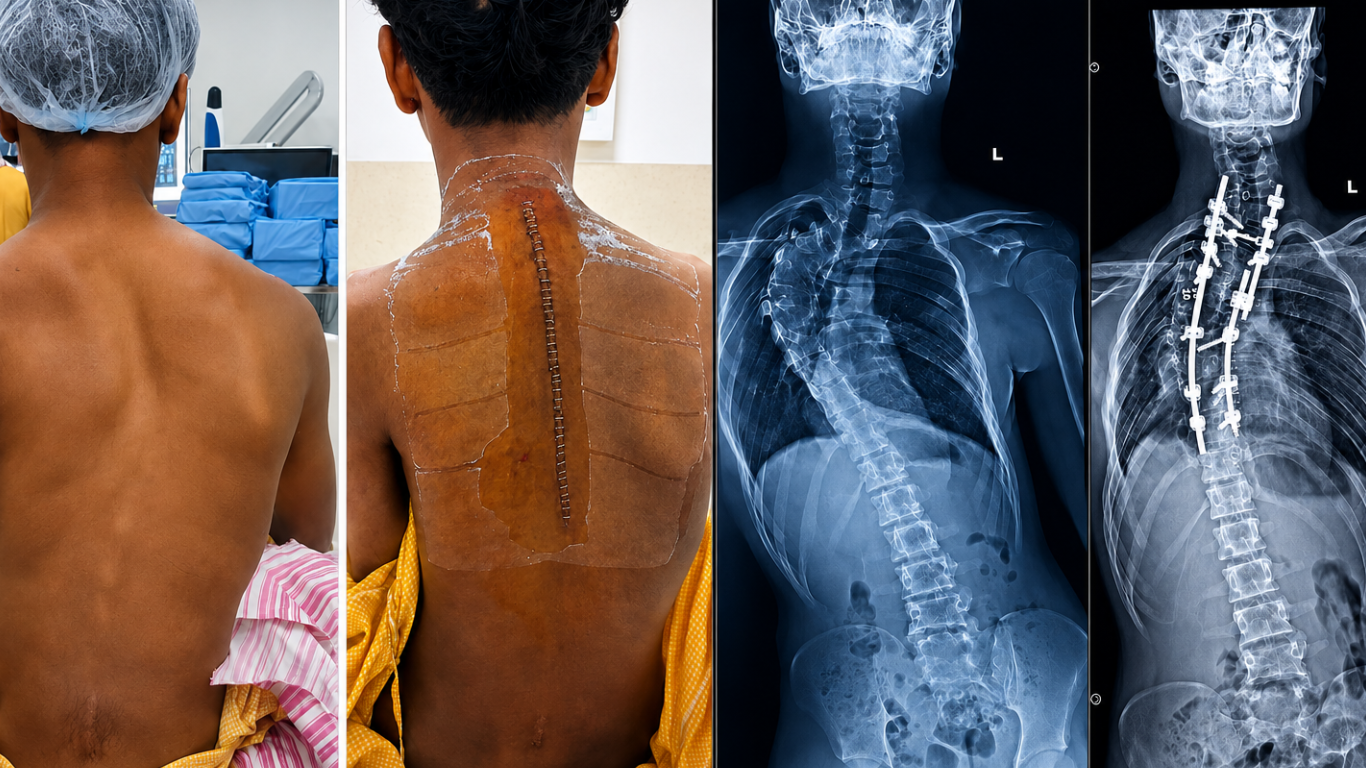
Scoliosis is a condition where the spine curves sideways instead of staying straight. In many people, the curve may be mild and not cause major problems in daily life. But in some cases, scoliosis can gradually worsen over time and start affecting posture, movement, breathing, and overall comfort
One of the most common questions patients ask is, “When does scoliosis become serious enough to need surgery?” The good news is that not every scoliosis patient requires surgery. However, certain warning signs should never be ignored.
Recognizing these symptoms early and getting timely medical evaluation can help prevent complications and support better long-term spinal health.
When Is Scoliosis Surgery Usually Needed?
Scoliosis surgery is usually recommended when the spinal curve exceeds 45–50 degrees, continues to worsen over time, causes persistent back pain, affects posture, or leads to breathing and nerve-related problems. While many mild scoliosis cases can be managed without surgery, severe spinal curvature may require surgical correction to prevent long-term complications and improve overall quality of life
Not Every Scoliosis Patient Needs Surgery
The good news is that most scoliosis patients do not require surgery. Mild spinal curves can often be managed with non-surgical treatments and regular monitoring.
Doctors may initially recommend:
- Physiotherapy
- Posture correction exercises
- Bracing for children and teenagers
- Regular spine check-ups
- Lifestyle modifications
- Pain management treatments
Surgery is usually considered only when the curve continues to progress or starts causing serious symptoms.
Can Scoliosis Be Treated Without Surgery?
Yes, many scoliosis patients can be treated without surgery, especially when the spinal curve is mild or detected early. Doctors usually recommend non-surgical treatments before considering surgery
Common non-surgical scoliosis treatments include:
- Physiotherapy
- Posture correction exercises
- Bracing for growing children
- Pain management
- Regular spine monitoring
- Lifestyle modifications
However, if the curve continues progressing despite conservative treatment, surgery may eventually become necessary to stabilize the spine and prevent further complications
How Do Doctors Decide If Surgery Is Needed?
Spine specialists evaluate several factors before recommending scoliosis surgery. The decision is based not only on the spinal curve but also on how much the condition affects daily life.
Doctors usually look for:
- Progressive spinal curvature
- Severe or persistent back pain
- Difficulty standing straight
- Breathing problems
- Nerve compression symptoms
- Poor posture and imbalance
- Reduced mobility
- Failure of non-surgical treatments
Every scoliosis case is different, which is why treatment plans are personalized for each patient.
Key Signs You May Need Scoliosis Surgery
- Worsening spinal curvature
- Uneven shoulders or hips
- Persistent or severe back pain
- Difficulty standing straight
- Visible rib hump progression
- Poor balance while walking
- Breathing difficulty
- Numbness or weakness in the legs
- Fatigue due to posture imbalance
- Reduced mobility in daily activities
Signs That Your Scoliosis May Be Getting Worse
There are certain warning signs that may indicate scoliosis is progressing and becoming more serious.
Your Spine Curve Looks More Noticeable
If the spinal curve becomes more visible over time, it may indicate that the condition is worsening. Some people notice their body leaning to one side or feel that their posture has changed significantly.
Common changes include:
- Uneven body alignment
- Leaning posture
- Visible spinal curve
- Difficulty maintaining balance
One Shoulder or Hip Appears Higher
Uneven shoulders or hips are common signs of scoliosis progression. This imbalance may gradually become more noticeable in daily activities.
You may observe:
- One shoulder sitting higher
- Uneven waistline
- Tilted hips
- One side of the body appearing elevated
Clothes Start Fitting Unevenly
Many patients first notice scoliosis progression through changes in how clothes fit.
For example:
- Shirts may hang unevenly
- Dress straps may slip from one side
- Pant legs may appear unevens
- Clothing may feel twisted while standing
Though subtle, these changes can sometimes indicate increasing spinal imbalance.
Persistent Back Pain
Mild scoliosis often causes little or no pain. However, severe scoliosis can place additional stress on the muscles, joints, and spinal discs, leading to chronic discomfort.
Back pain should not be ignored if it:
- Persists for long periods
- Affects daily activities
- Disturbs sleep
- Increases with standing or walking
- Does not improve with rest
Adults with scoliosis are especially more likely to experience pain due to spinal degeneration
A Rib Hump Becomes More Visible
As scoliosis progresses, the spine may rotate, causing one side of the ribs to protrude more than the other.
This is often noticed when:
- This is often noticed when:
- Wearing fitted clothes
- Standing sideways in the mirror
- Comparing shoulder blade positions
A visible rib hump may indicate more advanced scoliosis.
Difficulty Standing or Walking for Long Periods
As spinal imbalance increases, maintaining posture can become physically exhausting.
Patients may experience:
- Fatigue while standing
- Difficulty walking long distances
- Feeling tilted to one side
- Lower back strain
- Reduced stamina
These symptoms can gradually affect work, travel, and daily routine activities.
Breathing Problems Can Develop in Severe Cases
In severe scoliosis, the abnormal spinal curve may reduce chest space and affect lung expansion.
Warning signs may include:
- Shortness of breath
- Reduced exercise tolerance
- Chest tightness
- Difficulty taking deep breaths
Breathing problems should always be evaluated by a spine specialist
Numbness or Weakness in the Legs
In some adults, scoliosis can compress nearby spinal nerves.
This may lead to symptoms such as:
- Leg pain
- Tingling sensation
- Numbness
- Muscle weakness
- Difficulty walking steadily
These neurological symptoms often require immediate medical attention.
Severe Back Pain Is Not Something You Should Ignore
Many people assume back pain is normal with scoliosis, but severe or worsening pain often indicates something more serious
In adults, scoliosis may lead to:
- Disc degeneration
- Arthritis
- Nerve compression
Pain that continues despite rest, physiotherapy, or medication may require further spineevaluation
What Happens If Severe Scoliosis Is Left Untreated?
Ignoring severe scoliosis can sometimes lead to long-term complications. The spinal curve may continue worsening gradually over time.
Potential complications include:
- Progressive spinal deformity
- Chronic pain
- Reduced mobility
- Nerve compression
- Lung function problems
- Arthritis and spinal degeneration
- Poor posture and balance issues
Early diagnosis and treatment can help prevent many of these complications
At What Degree Is Scoliosis Surgery Recommended?
Doctors commonly use the Cobb angle to measure scoliosis severity.
In general:
- Curves below 20 degrees are usually monitored
- Curves between 20–40 degrees may require bracing or observation
- Curves above 45–50 degrees are more likely to require surgery
However, the decision also depends on symptoms, age, spinal balance, and progression rate
Signs Children and Teenagers Should Be Evaluated Early
Scoliosis often develops during growth spurts, especially during adolescence
Parents should look for:
- Uneven shoulders
- One shoulder blade sticking out
- Leaning posture
- Uneven waistline
- Visible spinal curvature
- Clothes fitting unevenly
Early treatment may help reduce the risk of severe spinal deformity later in life.
Signs Adults May Need Scoliosis Surgery
Adult scoliosis symptoms are often different from those seen in younger patients.
Adults may experience:
- Persistent lower back pain
- Difficulty standing upright
- Leg pain or numbness
- Spinal imbalance
- Walking difficulty
- Fatigue due to poor posture
Adult scoliosis can gradually worsen over time if left untreated.
What Happens During Scoliosis Surgery?
Scoliosis surgery aims to stabilize and straighten the spine as safely as possible. Surgeons may use rods, screws, and spinal fusion techniques to improve spinal alignment and prevent further progression.
Recovery After Scoliosis Surgery
Recovery time varies depending on the severity of the condition and the type of procedure performed.
Most patients gradually experience:
- Improved posture
- Better spinal balance
- Reduced pain
- Easier movement
- Improved quality of life
- Clothes fitting unevenly
Following rehabilitation instructions carefully is important for successful recovery.
Real Patient Case Study – 17-Year-Old Scoliosis Patient
A 17-year-old patient visited with worsening spinal curvature, uneven shoulders, and noticeable posture imbalance. After detailed evaluation, the patient was diagnosed with progressive scoliosis requiring surgical correction
Before Surgery
- Uneven shoulders
- Back discomfort
- Poor posture balance
After Surgery
- Improved spinal alignment
- Better posture and balance
- Reduced discomfort
- Improved confidence and daily activities
Timely scoliosis surgery helped prevent further progression and improved the patient’s overall quality of life.
Why Early Scoliosis Evaluation Is Important
Early diagnosis plays an important role in preventing severe scoliosis progression. Patients seeking scoliosis treatment in Chennai should consult a spine specialist if they notice posture imbalance, worsening spinal curvature, or persistent back pain.
Timely medical evaluation helps doctors:
- Monitor curve progression
- Identify complications early
- Recommend suitable treatment options
- Reduce the risk of severe spinal deformity
- Improve long-term spinal health
Advanced scoliosis treatment options are available for both adults and children, depending on the severity of the condition
When Should You Consult a Spine Surgeon in Chennai?
You should consider consulting a spine surgeon in Chennai if scoliosis symptoms begin affecting your daily activities, posture, mobility, or breathing. Early medical attention can help determine whether conservative treatment is sufficient or if surgical correction may eventually be required.
Seeking expert scoliosis evaluation at the right time can help prevent complications and improve overall quality of life
Doctor’s Advice for Scoliosis Patients
Not every scoliosis patient needs surgery, but worsening spinal curvature, persistent pain, posture imbalance, or breathing difficulty should never be ignored. Early evaluation helps us understand the severity of the condition and choose the right treatment at the right time.
With timely care and proper treatment, many patients can successfully manage scoliosis and maintain a healthy, active life. If you notice signs of worsening scoliosis, consulting an experienced spine specialist early can make a significant difference in long-term spinal health.
Don’t Ignore the Warning Signs of Scoliosis
Early evaluation and timely treatment can help prevent scoliosis from becoming more severe and affecting your daily life.
Book Your Scoliosis Consultation Today
If you notice signs of worsening scoliosis, consult an experienced spine specialist early for proper evaluation and timely treatment.
Frequently Asked Questions
Persistent back pain, worsening spinal curvature, posture imbalance, breathing difficulty, and nerve symptoms are common signs that scoliosis may require surgical evaluation.
No. Many mild scoliosis cases can be managed without surgery through observation, physiotherapy, or bracing
Scoliosis curves above 45 to 50 degrees are generally considered severe and may require surgery if progression continues.
Yes. Both adolescent and adult scoliosis can progress over time if left untreated
Yes. Severe spinal curvature can reduce chest space and affect lung function in some patients.
Modern scoliosis surgery is generally effective in improving spinal alignment, reducing progression, and improving quality of life for suitable patients.

